Gun Sound: Gun Shoot Simulator
- 3.9
- Rating
- 1.00M
- Installs
- Free
- Price

 Analysis by App-foxy
Gun Sound: Gun Shoot Simulator is the kind of small adventure game I open when I want a quick burst of atmosphere rather than a large, story-heavy campaign. Its central idea is simple: the sound and feel of firing a gun are the focus, while the surrounding presentation gives that action a more game-like setting. After spending time with it, I came away thinking that its appeal depends less on depth and more on whether you enjoy compact, sound-led play sessions.
That narrow purpose is both its identity and its biggest limitation. I would not approach it expecting the exploration, character development, or mission variety of a traditional adventure title. Instead, I see it as a lightweight simulator-style experience for short breaks, casual experimentation, and players who enjoy testing different audio impressions without committing to a long session. The sound is the main event, but the way it is placed inside an adventure framework determines whether the experience feels engaging or repetitive.
My first impression: a focused game built around immediate impact
The first thing I noticed is how quickly the game communicates its purpose. There is no need to learn a complicated control scheme before understanding the basic appeal. You interact with the shooting-focused experience, listen to the result, and decide whether the presentation is satisfying enough to keep exploring. That directness makes it approachable, especially when I only have a few minutes available.
You May Also Like

 Blood Strike: 2.5 Anniversary
Blood Strike’s Loadouts Turn Every Drop Into a Tactical Gamble
A close look at Blood Strike’s custom loadouts: how fast access to signature weapons reshapes its battle royale rhythm, rewards preparation, and narrows the gap between fights.

 Pandora - Music & Podcasts
Pandora’s Music Is Easy to Start, but Harder to Recover
Pandora’s strength is its low-effort path from a seed to a station. Its weak spot is how much confidence it asks you to place in connection, setup, and quiet recovery.

 8 Ball Pool
 Is Built on Rivalries, Rematches, and Routine
A close look at the rivalries, rematches, shared routines, and unanswered safety questions that turn a quick pool match into a persistent mobile community.

 Samsung Music
’s Quiet Strength Is Playing What You Already Own
Its reach comes less from spectacle than from dependable access to a personal library. That simplicity is both the app’s strongest retention engine and its ceiling.

 AccuWeather: Weather Radar
AccuWeather Review: A Quick, Clear Forecast for Everyday Decisions
For everyday plans, the best forecast is the one you can understand quickly. AccuWeather makes rain timing, radar, and local conditions easy to act on, with a few trade-offs.

 Hill Climb Racing
Why Hill Climb Racing Still Turns Crashes Into One More Run
A tiny car, a bumpy hill and one more upgrade: Hill Climb Racing keeps resurfacing because its simple chaos makes every near-miss feel personal.
More From Our News Desk
View All News


Wild Kanga keeps the concept deliberately accessible. The game is free to download, and its listing shows more than a million installs, so it has clearly reached a broad casual audience. Its average rating is 3.8 from roughly 600 ratings, which matches my impression of a game with a clear hook but a fairly specific audience. Some players will enjoy the immediate audio feedback, while others may quickly want more structure than the core idea provides.
I also found the adventure label useful, but only if it is interpreted loosely. This is not the sort of adventure game I would recommend to someone looking for puzzles, dialogue, or a carefully unfolding plot. Its adventure identity comes more from the feeling of entering a themed setting and interacting with a weapon-centered scenario. That distinction matters before downloading, because expectations will shape the experience more than the basic controls do.
The current version is 1.0.20, and the game supports devices running Android 7.1 or later. That makes it accessible to many older phones, which suits its compact design. On a modern device, I found the straightforward presentation easy to pick up without needing a long adjustment period. Players using an older phone should still keep their expectations realistic: broad compatibility does not turn a focused simulator into a technically ambitious production.
The Teen content rating is also worth taking seriously. The subject is weapon-based, and the presentation is designed around gun sounds and shooting imagery rather than a harmless toy theme. I would be comfortable recommending it to a teenager who understands that it is a simple game built around simulated firearms, but I would not treat it as a universal choice for younger children.
Why the opening works for short sessions
My favorite part of the opening experience is that it does not bury the central interaction beneath unrelated systems. When I pick it up during a break, I can get to the point quickly. That is valuable for a game with such a narrow purpose, because a long introduction would only make the simple concept feel more complicated than it is.
The trade-off is that immediate access leaves less room for surprise. A conventional adventure game often earns attention through new locations, characters, objectives, or discoveries. Here, the first impression tells me most of what I need to know. Continued interest therefore depends on whether the audio character and the surrounding mood are enough to keep the interaction fresh.
For that reason, I think it works best as a “pick up and try” game rather than a title I would plan an evening around. It can fill a short gap while commuting, waiting for an appointment, or relaxing at home, provided I want a compact sensory experience. If I am looking for a stronger sense of progress, I would choose a fuller action or adventure game instead.
The world language: how setting supports the central idea
Gun Sound: Gun Shoot Simulator communicates through a fairly direct visual language. Its setting exists to frame the weapon-focused interaction, not to compete with it. I read the world as a backdrop that tells me what kind of mood to expect: practical, immediate, and centered on the physical impression of firing.
That choice is sensible. A highly detailed fantasy world or a complicated narrative setting could clash with the stripped-down premise. By keeping the focus on the shooting theme, the game creates a recognizable identity quickly. I never felt that the presentation was trying to pretend this was a vast campaign. Instead, it presents itself as a compact activity with an adventure flavor.
The downside is that the setting has limited room to develop emotional meaning. A world becomes memorable when it changes how I play or gives context to my actions. In this case, the environment mainly supports the mood and the interaction. It helps the game feel more complete than a bare soundboard, but it does not replace the richer world-building found in story-driven alternatives.
This is where the game’s art direction and mechanics need to cooperate. If the visuals suggest a particular scenario, the sound has to reinforce it. If the setting feels too decorative while the interaction remains basic, the experience can become a mismatch. In my view, the game is strongest when I treat the visuals as stage lighting for the audio rather than as a separate attraction.
A useful way to read the visual design
I recommend approaching the presentation as a mood tool. Instead of asking whether the world offers a large amount of content, I ask whether it makes the central action feel more distinct. That shift makes the game easier to appreciate. It is not trying to win me over with a map full of secrets; it is trying to make a small interaction feel more deliberate.
This also explains why the game may appeal to players who enjoy themed sound experiences but do not want a complex simulator. The setting gives the activity a little context without demanding the attention required by a full tactical game. I can focus on the sound, glance at the visual framing, and stop whenever the session has run its course.
On the other hand, players who need a strong sense of place may find the world too thin. If your favorite part of an adventure game is meeting characters, uncovering background details, or watching an environment evolve, this title is unlikely to satisfy that preference. The setting is supportive rather than expansive, and that is a deliberate but noticeable limitation.
Sound and rhythm: where the game earns its attention
The sound design is the reason to try this game. The shooting effect is not just an accessory placed under a visual button; it is the feedback that gives the interaction its personality. Each action is judged by how immediate and convincing the result feels, so I paid more attention to the audio here than I normally would in a casual game.
That emphasis creates a particular rhythm. I interact, hear the response, and decide whether to continue. The loop is simple, but the audio gives it a physical sense of timing. When the sound arrives cleanly and matches the visual action, the game feels responsive. When I am no longer noticing differences or finding the feedback interesting, the session naturally loses momentum.
I found this rhythm better suited to brief, repeated visits than to long uninterrupted play. It has a satisfying immediacy at the start, especially when I am curious about the sound presentation. Over time, however, the lack of a larger musical or narrative structure can make the pacing feel flat. There is no extended buildup to carry me through a slow section, so the game has to rely on the central effect to maintain interest.
That is not necessarily a flaw. Some players want exactly this kind of direct audio interaction. It can be useful for testing a phone’s speaker output, comparing the feel of sound through headphones, or simply enjoying a themed effect without launching a demanding action game. I would keep the volume at a comfortable level, particularly when using headphones, because the repeated sharp sounds can become tiring during longer sessions.
How to get more from the audio focus
My practical advice is to try the game in more than one listening situation. The experience can feel different through the phone speaker, earbuds, and a quiet room. That does not transform the mechanics, but it helps reveal whether the sound itself is the part you enjoy. If the effect already feels repetitive through your preferred setup, changing the listening environment will not solve the deeper issue.
I also recommend treating the rhythm as a short-session loop instead of forcing it into a long play period. A few minutes can feel intentional; an extended session can expose how narrow the interaction is. This is one of the clearest trade-offs in the design: the same simplicity that makes the game easy to start also limits how long it can hold attention.
The sound-led approach gives the game a more coherent mood than a generic shooting button would have. It tells me what the developers want me to notice. At the same time, it places a heavy burden on a single element. If I am not impressed by the audio response, there is not a deep collection of other systems waiting to compensate.
Mechanical fit: who the interaction suits and where it falls short
Mechanically, the game fits players who want immediate feedback with very little preparation. I can understand the basic interaction almost instantly, which makes it friendly for casual users and people who do not usually play adventure games. It is also a reasonable option for someone who wants to sample a gun-sound concept without paying upfront.
The free entry point is helpful, but it does not mean the entire experience is free of commercial considerations. Optional in-app purchases are listed at $1.99 to $2.99 per item. I would decide whether the basic version already gives me enough enjoyment before spending anything. For a game built around a focused loop, even a small purchase deserves thought: the value depends on how much additional variety or convenience it adds for a particular player.
Because the purchases are item-based rather than presented here as a single required price, I would avoid assuming that buying something is necessary to understand the game. My approach would be to play the free version first, judge the sound and pacing, and only then consider whether an optional item improves the experience enough to justify the cost. That is especially important for users who expect a full adventure game after downloading.
One of the less obvious strengths is how little commitment the mechanics demand. I do not need to memorize a complex control layout or preserve progress across a long mission. That makes it suitable for a quick reset between tasks. A realistic example would be waiting for a friend at a café: I can open the game, interact for a few minutes, and close it without feeling that I have abandoned a major objective.
The same quality makes it a poor fit for players who want meaningful progression. If you prefer games where every session builds toward new abilities, tougher encounters, or a story conclusion, this will probably feel too slight. A conventional action game is better when you want challenge, while a narrative adventure is better when you want discovery. This title sits between those expectations, using adventure presentation to support a compact sound-centered activity.
How it compares with familiar alternatives
Compared with a standard shooting game, this experience is less demanding and less competitive. There is no need to manage a large combat system simply to enjoy the central sound idea. That makes it calmer and more accessible, but it also removes the tension that comes from enemies, objectives, resource decisions, and failure.
Compared with a dedicated soundboard, it offers more of a game atmosphere. The themed setting and interaction give the audio a context, so it feels less like pressing isolated buttons in a utility. The compromise is that a soundboard may offer broader control over individual effects, while this game keeps the experience within its chosen presentation.
Compared with a full adventure title, it is much easier to start but far less substantial. I would choose this game for a short sensory break and a larger adventure for a weekend session. Neither choice is automatically better; they answer different needs. The important thing is not to mistake the simple hook for a promise of extensive content.
Another practical consideration is age and household setting. The Teen rating means parents should consider whether gun-themed audio and imagery are appropriate for the person using the device. The game may be mechanically simple, but its subject is still specific. That makes it less suitable for a shared family tablet than a neutral puzzle or exploration game.
Atmosphere verdict: a compact mood piece with clear boundaries
After using it as intended, I see Gun Sound: Gun Shoot Simulator as a focused adventure game whose success depends on the connection between sound, visual framing, and short-session rhythm. It does not hide its central idea, and that honesty is refreshing. I know quickly whether the experience is for me because the game puts its main attraction forward rather than surrounding it with unnecessary complexity.
Wild Kanga has made something approachable for players who enjoy simulated gun sounds, quick interactions, and a lightly themed setting. The game’s broad install reach suggests that this kind of immediate concept can attract casual attention, but the moderate average rating also reflects the natural limits of a narrow design. It can be enjoyable without being deep, and those two qualities should not be confused.
I would recommend it to someone who wants a free, easy-to-start audio-focused game for short breaks, especially if they like trying small simulator-style experiences. I would also recommend testing it with the listening setup you actually use, because the sound is central enough that your phone speaker or headphones will shape your opinion. The current version, 1.0.20, supports Android 7.1 and later, which makes trying it possible on a wide range of devices.
I would skip it if my priority were story, exploration, competitive combat, or long-term progression. In those cases, a conventional adventure or action game will offer more meaningful reasons to continue. I would also avoid paying for optional items until I had confirmed that the free experience genuinely holds my attention, since the listed purchases cost between $1.99 and $2.99 per item.
My final impression is positive but measured. The game creates a coherent mood by letting the shooting sound lead and allowing the setting to reinforce it. Its pacing is quick, its purpose is clear, and its low commitment is useful in everyday situations. If you want a small, sound-driven experience rather than a complete adventure campaign, it is worth a try; if you need depth, the same simplicity will be the reason you move on.
FAQs for Gun Sound: Gun Shoot Simulator
01What is Gun Sound: Gun Shoot Simulator?
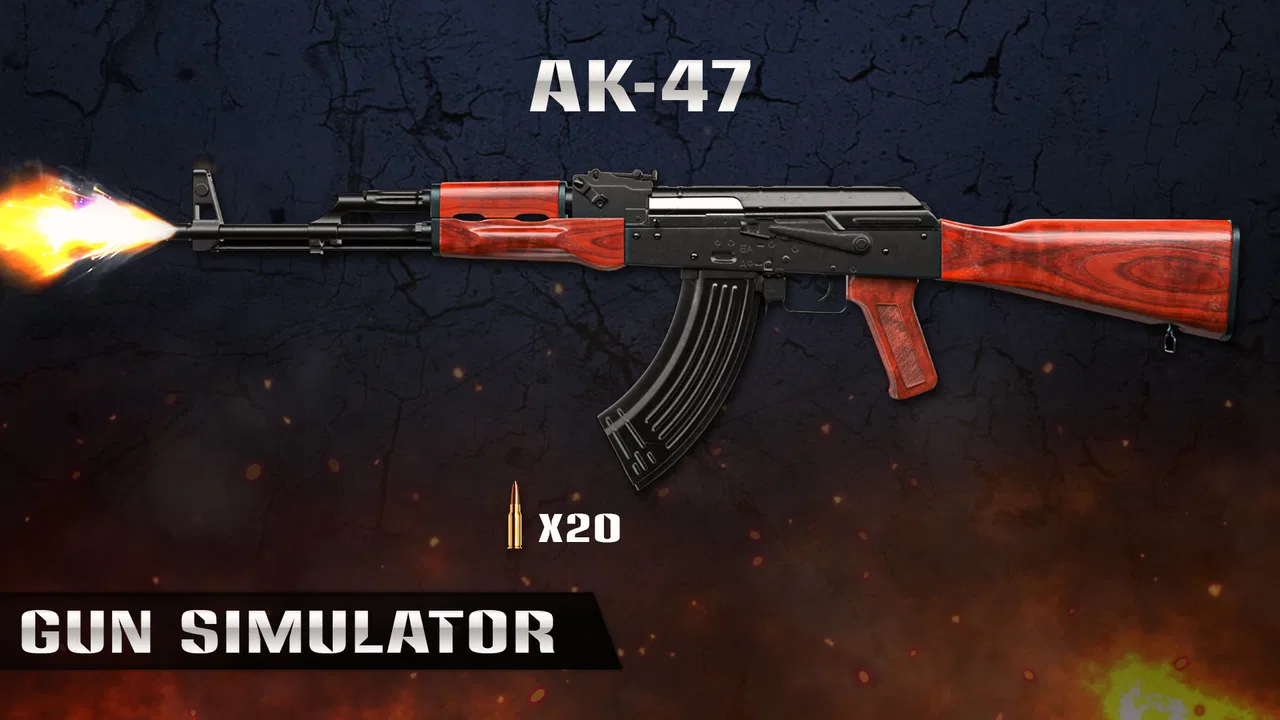
Gun Sound: Gun Shoot Simulator is a mobile app designed to simulate the sounds and functions of various firearms. It provides a realistic experience with high-quality sound effects and detailed animations for gun enthusiasts or those interested in learning more about different types of firearms.
02Is Gun Sound: Gun Shoot Simulator free to download and use?
The app is available for free download on both Android and iOS platforms. However, it may offer in-app purchases or advertisements to enhance the user experience or provide access to additional features, such as premium gun models or ad-free usage.
03Does Gun Sound: Gun Shoot Simulator require an internet connection?
No, Gun Sound: Gun Shoot Simulator does not require an internet connection to function. Users can enjoy the app's features offline, making it convenient to use anywhere, anytime. However, an internet connection might be needed for downloading additional content or updates.
04Is Gun Sound: Gun Shoot Simulator suitable for children?
While the app is not explicitly designed for children, it is important for parents to consider the nature of the content, which involves realistic gun sounds and animations. It is advisable for parents to review the app and set appropriate age restrictions or supervision if needed.
05What devices are compatible with Gun Sound: Gun Shoot Simulator?
Gun Sound: Gun Shoot Simulator is compatible with most modern Android and iOS devices. It requires a minimum operating system version, which can be checked on the app's download page. Ensuring your device meets these requirements will optimize performance and user experience.
Pros
- Realistic sound effects enhance immersion.
- Wide variety of guns to explore and simulate.
- User-friendly interface for easy navigation.
- Offline mode available for uninterrupted play.
- Regular updates with new features and guns.
Cons
- Contains ads that may disrupt gameplay.
- Limited free content
- with in-app purchases.
- Requires frequent updates for optimal performance.
- Some users report occasional app crashes.
- Not suitable for young audiences due to realism.

Gun Sound: Gun Shoot Simulator
Gallery